

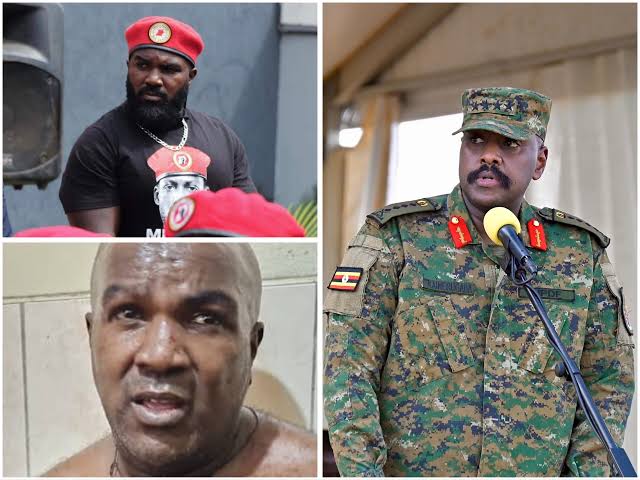
On April 27, 2025, Eddie Mutwe, the chief bodyguard of National Unity Platform (NUP) leader Robert Kyagulanyi, popularly known as Bobi Wine, was abducted in Mukono District by men in civilian and military attire. Days later, Uganda’s Chief of Defence Forces (CDF), General Muhoozi Kainerugaba, confirmed Mutwe’s detention through a series of inflammatory tweets, sparking outrage and deepening ethnic tensions between the Baganda and Banyankore communities. These posts, laced with tribal references and mockery, have not only highlighted the ongoing political repression in Uganda but also amplified fears of ethnic division, threatening the country’s fragile social fabric. This article explores the escalating tensions, public reactions, NUP’s response, and the broader implications for Ugandans.
The Incident and Kainerugaba’s Provocative Tweets
Eddie Mutwe’s abduction occurred at Kiwango trading center in Mukono, a stronghold of NUP support, which is predominantly Baganda. On May 1, 2025, General Kainerugaba, a Munyankore and son of President Yoweri Museveni, took to X to confirm Mutwe’s detention, stating, “He is in my basement. Learning Runyankore. You [Bobi Wine] are next!”. This was followed by a series of taunting posts, including, “If you see Eddie’s head now he looks like an egg. Totally clean. The beards were the first thing the boys removed. After he finished crying and urinating,” and claims that Mutwe was being “tuned” and forced to salute a photo of President Museveni daily. Kainerugaba also shared a naked photo of Mutwe, widely interpreted as evidence of torture, and threatened to castrate him.
The reference to “learning Runyankore,” the language associated with the Banyankore, was particularly inflammatory, as it framed Mutwe’s detention in ethnic terms, pitting the Baganda, who form the majority of NUP’s base, against the Banyankore, who are often associated with the ruling National Resistance Movement (NRM) elite. Kainerugaba’s posts, devoid of any legal justification for Mutwe’s detention, have been condemned as evidence of impunity and state-sponsored torture, exacerbating ethnic and political divides.
Ethnic Tensions and Public Reactions
The Baganda and Banyankore have historically coexisted, but political power dynamics, with the NRM perceived as favoring Banyankore elites, have strained relations. Kainerugaba’s tweets have inflamed these tensions, with many Baganda viewing the detention as an attack on their community, given Mutwe’s prominence as a Baganda NUP figure. Conversely, some Banyankore have distanced themselves from Kainerugaba’s remarks, fearing they could stoke retaliatory sentiments.
X posts from Baganda and Banyankore reflect widespread concern. A Baganda user,
@GodberTumushabe, wrote on May 2, 2025, “Why don’t you think Banyankole are being conditioned to hate Baganda? What did Eddie Mutwe do to be subjected to this impunity?”. This highlights fears that Kainerugaba’s actions are fostering anti-Baganda sentiment. Similarly, a Munyankore user,
@KwikirizaNova, from Kiruhura, stated, “As a munyankore, more so from Kiruhura, I want in the loudest voice possible to disassociate myself from the insensitive, tribal and disgusting utterances of the CDF against his victim Eddie Mutwe, and I call upon all westerners of sober mind to come out and make it clear that this ain’t our identity”. Another Munyankore,
@MugishaEmanzi, echoed this, saying, “On behalf of all sane Banyankore, we distance ourselves from this ujinga and call for the unconditional release of Eddie and other political prisoners”.
These reactions underscore a shared anxiety: Kainerugaba’s rhetoric risks painting entire ethnic groups as adversaries, potentially inciting violence. The Baganda fear targeted persecution, while progressive Banyankore worry about being stereotyped as complicit in the regime’s abuses.
NUP and Bobi Wine’s Response
The NUP, with its strong Baganda base, has been vocal in condemning Mutwe’s detention. Bobi Wine, a Baganda icon, responded directly to Kainerugaba’s tweets on May 1, 2025, posting on X, “Museveni’s son confirms that our brother Eddie Mutwe is being detained in his basement, ‘Learning Runyakore’. Time will tell”. The next day, he escalated his rhetoric, stating, “Eddie Mutwe is all of us. Today it is him, tomorrow it could be any one of us. Museveni’s brutal son is illegally holding, torturing, and dehumanizing him while he boasts about it. He says he is teaching Eddie Runyakore! Eddie represents more than himself. He represents all of us”.
NUP Secretary General David Lewis Rubongoya had earlier announced Mutwe’s abduction, noting his whereabouts were unknown until Kainerugaba’s posts. Party officials have demanded Mutwe be produced in court, with one stating, “This is a clear indication that our colleague is being held. We expect the state to follow the law”. The NUP’s response frames Mutwe’s detention as part of a broader campaign to suppress opposition, particularly targeting Baganda supporters, who face abductions, torture, and extrajudicial detentions.
Bobi Wine’s remarks emphasize solidarity, positioning Mutwe’s plight as a universal threat to Ugandans, regardless of ethnicity. However, the ethnic undertones in Kainerugaba’s tweets complicate this narrative, as they risk alienating non-Baganda supporters and deepening tribal divides within the opposition.
Why This Is Dangerous for Ugandans
The detention of Eddie Mutwe and Kainerugaba’s inflammatory tweets pose multiple dangers for Uganda:
- Ethnic Polarization: By framing Mutwe’s detention in ethnic terms, Kainerugaba risks igniting communal violence. The Baganda, who dominate central Uganda, and the Banyankore, prominent in the west, are integral to Uganda’s social and economic fabric. Historical grievances, such as perceived Banyankore dominance in government, could escalate into open conflict if ethnic rhetoric persists. As @GodberTumushabe noted, this could condition communities to view each other as enemies.
- Erosion of Rule of Law: Kainerugaba’s failure to specify charges or a legal framework for Mutwe’s detention underscores the impunity of security forces. This sets a precedent for arbitrary arrests, particularly targeting opposition figures, and undermines public trust in institutions. The lack of response from the Uganda Police Force or UPDF as of May 2, 2025, further fuels perceptions of a militarized state.
- Escalation of Political Violence: Kainerugaba’s history of threatening Bobi Wine, including a 2025 post about beheading him, and now targeting his inner circle, signals a willingness to use violence to silence dissent. With the 2026 elections looming, such actions could provoke unrest, especially among NUP’s youth base, which has faced repression since 2021. Analysts warn that inflammatory rhetoric risks polarizing the nation further.
- Regional and International Fallout: Kainerugaba’s provocative social media presence, including past threats against foreign nations, has already strained Uganda’s diplomatic relations. Domestically, his actions could alienate moderate voices within the NRM and opposition, complicating efforts to unify Ugandans against authoritarianism. Internationally, human rights groups may intensify pressure, as seen in prior ICC complaints against Kainerugaba.
- Social Cohesion at Risk: Uganda’s diversity is both a strength and a vulnerability. Kainerugaba’s tweets, by invoking tribal stereotypes, threaten to unravel decades of coexistence. The fear expressed by Banyankore like @KwikirizaNova, who reject his rhetoric, shows the potential for intra-ethnic divisions as well. If unchecked, this could lead to localized violence or broader instability, as seen in past ethnic clashes over land and resources.
A Critical Perspective
From a critical standpoint, Kainerugaba’s actions appear calculated to provoke and consolidate power. By targeting Mutwe, a symbol of NUP’s resistance, and framing it ethnically, he may aim to weaken the opposition’s cohesion while rallying his base. However, this strategy is a double-edged sword. While it may intimidate some, it galvanizes others, as seen in Bobi Wine’s defiant response and the public outcry on X. The absence of legal accountability suggests a regime confident in its grip on power, yet the backlash indicates growing discontent that could erupt as elections near.
The ethnic framing also distracts from systemic issues—corruption, unemployment, and repression—that affect all Ugandans. By pitting Baganda against Banyankore, the regime diverts attention from its failures, but at the cost of social stability. The real danger lies in the precedent: if a CDF can openly boast about detaining and humiliating citizens, what prevents further abuses? This incident is a microcosm of Uganda’s slide toward authoritarianism, where power is wielded through fear and division.
Conclusion
The detention of Eddie Mutwe and General Kainerugaba’s tribal taunts have thrust Uganda into a precarious moment. The Baganda-Banyankore divide, fueled by these events, threatens to unravel social cohesion, while the NUP’s calls for justice highlight the stakes for democracy. For Ugandans, the dangers are clear: ethnic strife, eroded rule of law, and escalating violence could destabilize the nation. As Bobi Wine noted, “Eddie Mutwe is all of us”—a reminder that the fight for justice transcends tribe. Without accountability and restraint, Uganda risks a future where division triumphs over unity, a tragedy that sober voices, from
@KwikirizaNova to
@MugishaEmanzi, are desperately trying to avert. The world is watching, but it is Ugandans who will bear the consequences.

