

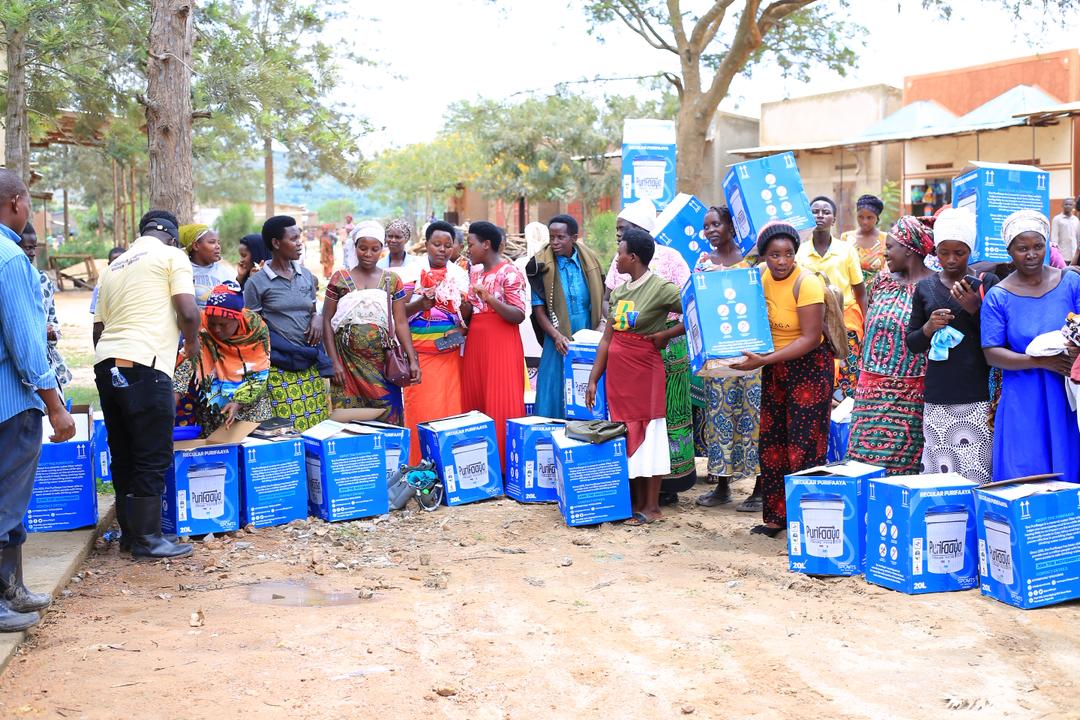
In Kampala, a growing network of refugee women is addressing income gaps through a plethora of community programs led by the Association of Refugee Women in Uganda (AORW-U).
The organization began as a small weekly support group among Congolese women and has since expanded to include refugees from Burundi, Rwanda, and Somalia. Their work now includes economic empowerment, education support, health access, and skills training across refugee settlements and urban communities.
They are Expanding financial access for refugee livelihoods
A central pillar of their work is economic inclusion. Through the Refugee Prosperity Fund, the organization provides financial services that many refugees cannot access through formal banking systems.
The fund offers microloans with flexible repayment terms, savings options, and basic insurance products. It also includes financial literacy sessions that cover budgeting, debt management, and small business planning. For many beneficiaries, these services are their first dealings with any financial system.
The beneficiaries are often women running informal businesses, youth seeking income opportunities, and households without stable earnings.
Alongside financing, the program connects participants with mentors and local market opportunities and helps them move beyond subsistence-level activity while pushing toward more consistent income generation.
Menstrual Health Support for Refugees
Project HER (Hygiene, Empowerment, and Respect) is another promising project, which addresses menstrual health challenges among adolescent refugee girls. In many low-income families, sanitary products are expensive. It forces the girls to rely on improvised materials. As a result, they get subjected to health risks and absenteeism from school.
Project HER distributes sanitary kits that include pads, soap, and underwear, along with guidance materials on menstrual hygiene. The program also conducts training sessions in local languages, so that the girls know how to use it.
School girls and young women living in refugee settlements and urban neighborhoods are the main beneficiaries. The impact extends beyond hygiene. Regular attendance in school improves when girls have reliable access to sanitary products.
At the same time, the program minimizes the likelihood of risky and unsanitary alternatives due to financial constraints.
Safer Classrooms Mean Better Access to Education
Education-focused initiatives are another core area of AORW-U. Through the Education 4 Her program, the organization supports refugee schoolgirls with learning materials and school supplies distributed across selected schools in Kampala.
The program also conducts sensitization sessions on gender-based violence within school environments, for the aim is to create safer classrooms and a support system where the girls can share incidents without shame.
In addition to material support, the organization has introduced life skills clubs in schools. These clubs provide spaces where girls can discuss personal challenges, build confidence, and develop practical skills.
The challenges faced by refugee girls in education are not limited to resources. Several factors are factored in here – language barriers, financial constraints, and cultural pressures, which often contribute to dropout rates.
Early marriage remains a concern in some communities. Education is deprioritized there. AORW-U tries to address these overlapping issues.
We Believe that Skills Training Can Lead to Income Generation
Through the ICT4 Refugees program, refugee children and young adults are introduced to computer literacy and digital learning tools. Many of the refugees are out-of-school children attending literacy classes.
The program conducts sessions during weekdays, and there are additional classes during weekends. Participants are trained in basic computer operations, digital communication, and online learning platforms.
The curriculum is based on national education standards, and it allows the students to sit for public examinations.
To support this initiative, the organization has set up computer labs equipped with laptops and related tools. For many students, this is possibly their first time using digital tools.
Vocational training is also part of the organization’s long-term strategy. The Vocational Skills 4 Her program focuses on tailoring and sewing, areas that are keys for income generation. A training center in Kampala gives training on garment production.
The refugees receive training that caters to both technical skills and business fundamentals. After completing the course, some are provided with starter kits to begin small tailoring businesses. Others use the skills to make items like school uniforms or reusable sanitary products.
Food & Capital Support for Women-led Businesses
Food insecurity remains a persistent issue among refugee households in Kampala, and AORW-U addresses this through its Food Packs 4 Her initiative. They distribute basic food items like rice, beans, maize flour, and cooking oil to vulnerable families. These distributions are meant to supplement diets that are quite limited in these families.
Not only training, their primary work remains capital assistance. The program helps women who are ready to start or expand small businesses but lack the financial means to do so.
Training sessions cover bookkeeping, business planning, and operational management. Participants then receive funding to implement their plans.
The goal is not only individual income growth but also household stability. When women have a reliable income source, they can invest in their children’s education and healthcare.
Over time, this contributes to improved living conditions without too much reliance on their husbands.
What Progress Means for AORW-U
More than dependency, it’s more sustainable to equip the refugees with tools that can be benchmarks for their own economies.
Over time, the organization has been built and guided within the community itself. Support for income, access to education, health awareness, and skills training are not just separate efforts. They are brought together to address the multi-layered challenges refugee families face in Kampala.
In Kampala’s refugee communities, small changes can be observed in everyday life. Women are slowly starting small businesses to support their households, and young people are getting practical skills that improve their chances of finding work.
As refugee populations continue to grow in urban areas, AORW-U continues to address these perennial issues at a grassroots level.

