

Officials from the United States and Israel have reportedly engaged in high-level discussions about the potential relocation of Palestinian refugees from Gaza to East Africa. The proposed plan, which would involve resettling displaced Palestinians to countries such as Sudan, Somalia, and possibly other East African nations, has drawn sharp criticism from human rights groups, Palestinian leaders, and regional governments.
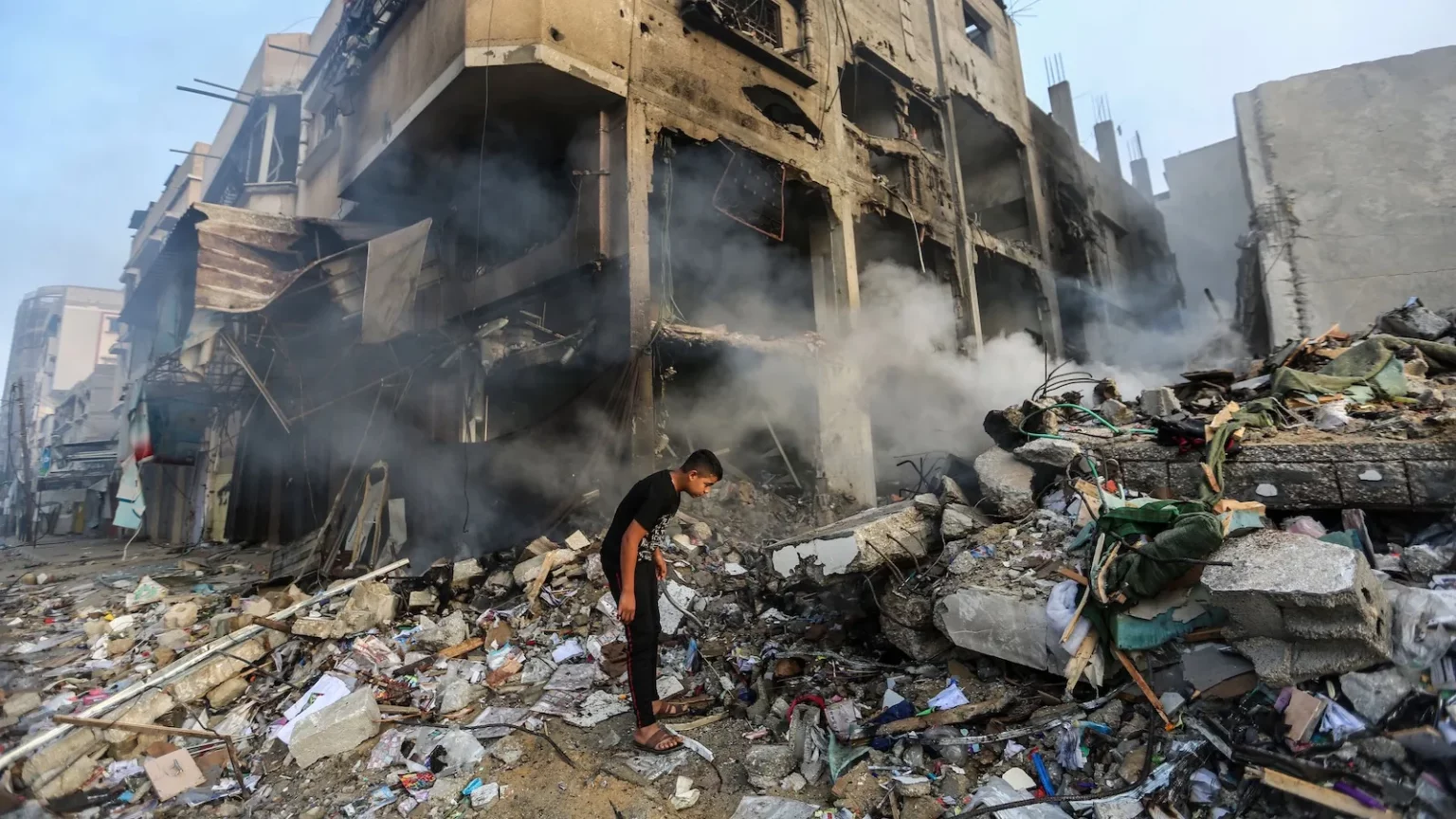
The ongoing conflict in Gaza, which has intensified in recent months, has prompted significant humanitarian concerns, with both Israel and Hamas exchanging heavy bombardments that have left thousands of civilians dead or wounded. The humanitarian toll of the conflict, combined with the destruction of infrastructure in Gaza, has led many to call for long-term solutions to the crisis. In this context, the United States and Israel are exploring options for managing the growing refugee situation, including the possibility of large-scale resettlement to East Africa.
The Proposed Plan: Relocation or Forced Displacement?
Sources close to the discussions suggest that the plan is still in its early stages, with key details yet to be finalized. However, reports indicate that the primary objective is to alleviate overcrowding in Gaza’s refugee camps and to reduce tensions between Israel and Palestinian factions. The proposal suggests that Palestinians who have lost their homes or have been displaced by the ongoing conflict could be relocated to countries in East Africa, where they would be offered refugee status and resettlement opportunities.
According to U.S. officials, the rationale behind the plan is to create a “new reality” where the Palestinian population could have access to basic services, employment opportunities, and a future free from the constant threat of conflict. “The goal is to provide Palestinians with a safe and stable environment, where they can rebuild their lives away from the violence in Gaza,” said a U.S. State Department official familiar with the talks.
Israel, for its part, has expressed support for the idea as a way of reducing the pressure on its borders and avoiding the political and security challenges posed by an expanding Palestinian refugee population. Israeli officials have pointed to the success of other international resettlement programs as potential models for the plan.
East African Countries React with Mixed Responses
While the United States and Israel have framed the idea as a solution to the ongoing humanitarian crisis in Gaza, the proposal has raised alarms among the governments and people of East African nations. Some countries have voiced their concerns about the logistics of resettling a large number of people and the potential economic strain it could cause.
Sudan, which shares historical ties with Palestine, has yet to make an official statement, but sources indicate that the government is wary of any arrangement that could lead to further instability in the region. Somalia, already grappling with its own security and humanitarian challenges, has similarly refrained from publicly endorsing the plan.
Meanwhile, civil society groups and human rights organizations in East Africa have criticized the proposal, calling it a form of “forced displacement.” “We cannot support a plan that treats people as if they are commodities to be relocated based on political convenience,” said Alia Mohamed, a spokesperson for the East Africa Refugee Alliance. “Instead of focusing on moving people from one region to another, the international community must focus on finding a real, lasting solution to the conflict in Gaza.”
Palestinian Reaction: A Breach of Sovereignty
Palestinian officials have vehemently opposed the relocation discussions, condemning them as an infringement on Palestinian sovereignty and a blatant disregard for the right of Palestinians to return to their homeland. “This proposal is nothing short of a plan to erase the Palestinian presence in Gaza and deny our people their basic rights,” said Nabil Abu Rudeineh, a spokesman for the Palestinian Authority. “Relocation is not an option. The solution lies in achieving peace, ending the occupation, and securing our right to return.”
Similarly, Hamas, the militant group that controls Gaza, has rejected the idea, accusing both the U.S. and Israel of attempting to impose a “final solution” to the Palestinian issue by displacing millions of people from their homes.
International Criticism and Potential Consequences
The discussions have drawn heavy criticism from international organizations, including the United Nations. The UN High Commissioner for Refugees (UNHCR) issued a statement urging all parties involved to prioritize the protection and rights of Palestinian civilians, while stressing the importance of upholding international law.
“Displacement must never be a solution to the Palestinian question,” said UNHCR spokesperson Jean-Pierre Renaud. “Relocating people to distant regions does not address the root causes of their suffering. A political solution that ensures the safety, dignity, and rights of Palestinians must be found.”
The proposal’s potential impact on regional stability is also a point of concern. The East African region has experienced its own challenges with conflict, including the ongoing crises in South Sudan, Sudan, and Somalia. Analysts fear that adding a large number of refugees to these fragile states could further destabilize the region.
The Road Ahead
While the talks between the U.S. and Israel are still in the early stages, the reaction to the idea has been swift and divisive. As discussions continue, the international community will closely monitor the situation, with many hoping for a peaceful resolution that does not come at the expense of human dignity or sovereignty.
For Palestinians in Gaza, the focus remains on securing an end to the violence and finding a path toward lasting peace—one that ensures they can live in their own homeland, free from the constant threat of war and displacement.

