

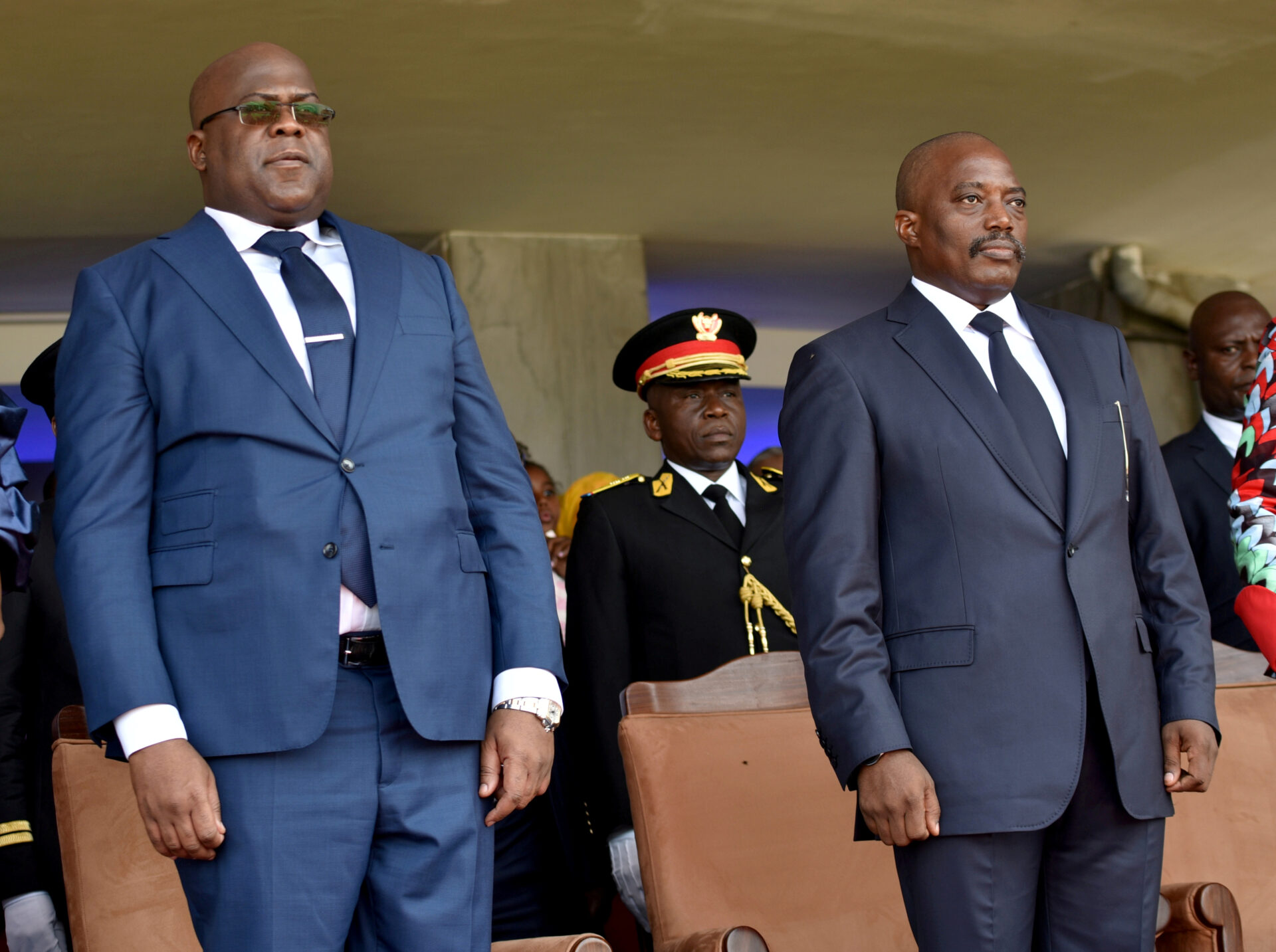
In a dramatic political twist, former Democratic Republic of Congo (DRC) President Joseph Kabila has emerged from a year-long silence to vehemently oppose current President Felix Tshisekedi’s proposal to amend the nation’s constitution. Kabila, who governed the DRC from 2001 to 2019, is widely regarded as the architect of the 2006 constitution, a pivotal framework that facilitated peace and reunification in the war-torn country.
Meeting with opposition leader Moïse Katumbi in Addis Ababa, Ethiopia, Kabila issued a joint communiqué denouncing the proposed constitutional reforms as a blatant attempt by Tshisekedi to entrench himself in power indefinitely. The statement declared, “In the present circumstances, a reform of the constitution is illegal and inappropriate,” further alleging that the ultimate goal is “the consolidation of dictatorship through a presidency for life in the DRC.”
This development has intensified the political climate in the DRC, with opposition figures uniting against what they perceive as a threat to the democratic principles established over the past two decades. Katumbi, once an influential ally of Kabila, has aligned with his former rival to resist any constitutional changes, calling on all Congolese to “actively resist the current government’s desire to break the republican pact.”
President Tshisekedi, who commenced his second term in January 2024, has advocated for constitutional amendments, arguing that the 2006 constitution is outdated and misaligned with the country’s current realities. However, critics fear that such reforms could be a tactic to remove term limits, enabling him to extend his tenure beyond the constitutionally mandated two terms.
The controversy echoes a similar crisis during Kabila’s presidency when he attempted to revise the constitution to extend his tenure but faced fierce resistance from civil society groups and the Catholic Church. Now, it is Kabila’s own party, the Common Front for Congo (FCC), that is opposing such amendments, firmly rejecting the draft constitutional changes.
The DRC’s Catholic bishops have also expressed concern, warning that any attempt to alter the constitution could provoke unrest and reignite conflicts in the country. The Secretary General of the Congolese Episcopal Conference (CENCO), Donatien Nshole, stated that a change to the constitution is “very dangerous because it can further destabilize the country.”
As tensions escalate, opposition leaders, including Kabila and Katumbi, have called for nationwide protests to “block” Tshisekedi’s proposed changes. The coming weeks are poised to be critical in determining the DRC’s political trajectory, with the potential for significant unrest if the government proceeds with the contentious constitutional review.

