

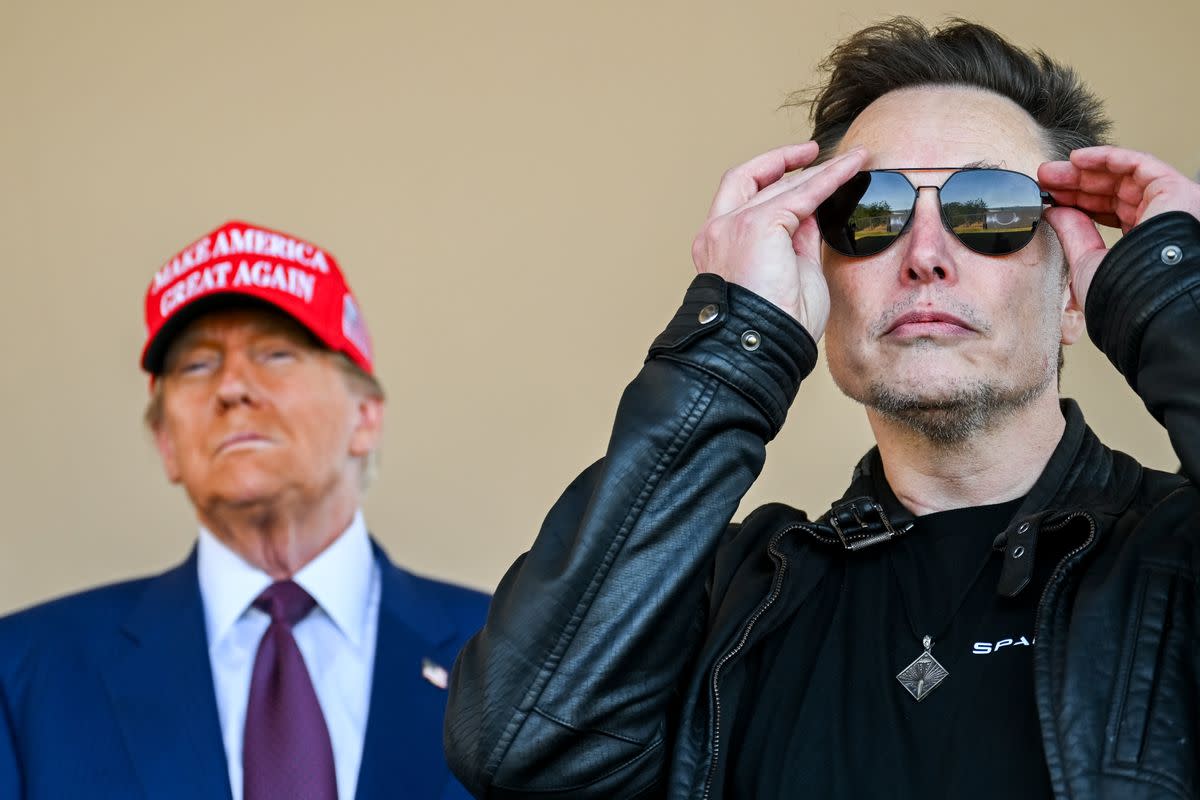
Donald Trump’s return to the White House, set for January 20, promises sweeping changes as the former president unveils a trusted team of loyalists to execute his most ambitious policies. Among these power players are a South Dakota farmer, a Democratic defector, and the world’s richest man—each handpicked for their loyalty and vision. Here’s an inside look at Trump’s appointees, their key roles, and the challenges they may face.
Immigration: The Border Hardliners
Securing the border remains a cornerstone of Trump’s platform, with mass deportations and a crackdown on illegal immigration topping the agenda.
Kristi Noem, a staunch conservative and South Dakota governor, is nominated as Homeland Security Secretary. Known for her opposition to Afghan refugee resettlement and her deployment of state National Guard troops to Texas for border enforcement, Noem embodies Trump’s no-nonsense approach.
Partnering with her is Tom Homan, a former Immigration and Customs Enforcement (ICE) officer, appointed as Border Tsar. With a reputation for his hardline stance on immigration, Homan was an early advocate of family separations under Trump’s first term and remains a prominent voice on border security.
Analysis: While these appointments signal Trump’s seriousness about immigration reform, implementing mass deportations and workplace raids may spark pushback from Democratic states and immigrant-reliant industries.
Foreign Policy: The China Hawks
Trump’s foreign policy team reflects his tough stance on China, the perceived rival to U.S. dominance.
Marco Rubio, the Cuban-American senator from Florida, is tapped as Secretary of State. Despite past tensions with Trump, Rubio has become a staunch ally and a vocal critic of China, Iran, and Russia.
Meanwhile, Michael Waltz, a decorated military veteran and Florida congressman, steps in as National Security Adviser. Known for his warnings about China’s growing influence, Waltz is expected to advocate for stronger U.S. defenses in the Pacific.
Analysis: Managing Trump’s unpredictable approach to foreign policy may prove challenging. Rubio and Waltz’s tough rhetoric on China could clash with Trump’s past praise of Xi Jinping, complicating diplomatic efforts.
Efficiency: The Cost-Cutters
Trump’s proposed “Department of Government Efficiency” (DOGE) will be led by tech magnate Elon Musk and entrepreneur Vivek Ramaswamy, tasked with slashing bureaucracy and government spending.
Musk, the world’s richest man, has vowed to cut $2 trillion from federal budgets, while Ramaswamy, a former Republican presidential candidate, champions the elimination of agencies like the IRS and the Department of Education.
Analysis: Though ambitious, DOGE faces structural limitations as it lacks formal governmental authority, and its aggressive cost-cutting proposals may conflict with Trump’s promises to protect programs like Medicare and Social Security.
Health and Intelligence: The Disruptors
Trump’s disruptive picks include Robert F. Kennedy Jr. for Health and Human Services and Tulsi Gabbard as Director of National Intelligence.
Kennedy, an environmentalist and critic of vaccine mandates, aims to overhaul America’s food systems while reviewing vaccine policies, drawing both support and skepticism. Gabbard, a military veteran and former Democrat, brings a non-interventionist perspective to intelligence, despite past controversies over her comments on U.S. foreign policy.
Analysis: While Kennedy and Gabbard align with Trump’s “deep state” reform agenda, their unconventional views could ignite intra-administration clashes and public controversy.
Economy: The Tariff Enforcers
Trump’s economic team includes Howard Lutnick as Commerce Secretary and Scott Bessent as Treasury Secretary, both champions of trade tariffs.
Lutnick, CEO of Cantor Fitzgerald, supports wide-ranging tariffs and deregulation, while Bessent, a seasoned financier, backs increased U.S. oil production and budget cuts.
Analysis: While the duo aligns with Trump’s protectionist trade vision, reliance on tariffs could provoke resistance from trading partners and corporate America.
Conclusion: A Radical Vision, a Divided Road Ahead
Trump’s appointments reflect a determination to enact sweeping changes while consolidating power within a loyal inner circle. However, their bold agendas may face significant hurdles, from Senate confirmations to bipartisan resistance. As January 20 approaches, the nation braces for a new era of disruption and transformation under Trump’s leadership.

