

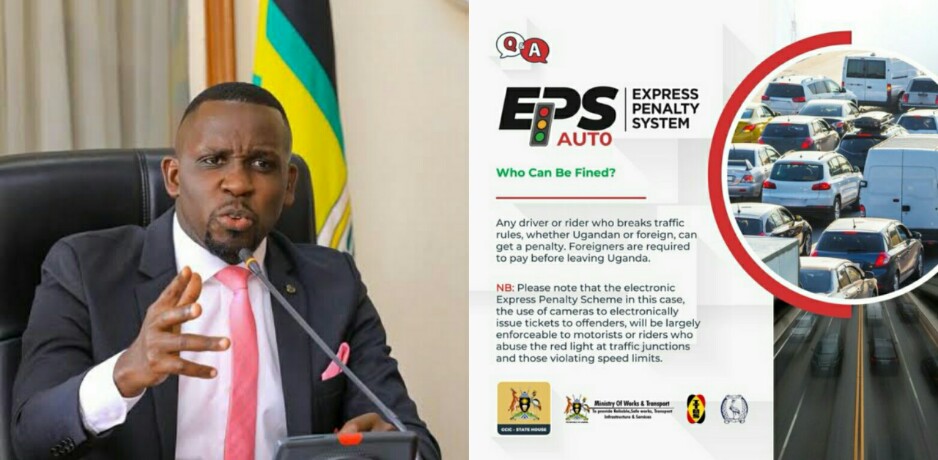
The controversial Electronic Penalty System (EPS), now active on Uganda’s roads, has sparked widespread public outrage — prompting Leader of the Opposition Hon. Joel Ssenyonyi to officially raise concerns with the Minister of Works and Transport, Gen. Katumba Wamala.
In a letter dated 10th June 2025, Ssenyonyi highlighted the growing frustration among motorists over what they see as an exploitative and poorly implemented system. While the EPS was designed to promote road safety, Ugandans on the ground say it is doing more harm than good.
“Motorists are calling this system punitive and exploitative, rather than corrective or educational,” Ssenyonyi wrote, noting that drivers are being hit with traffic fines without clear justification or proper explanation.
Some of the key concerns include:
- Lack of public awareness: Many drivers were unaware of how the system works or how to contest wrongful penalties.
- Confusing speed limits: Low speed limits on roads like the Northern Bypass are causing confusion, with no clear signage.
- Security risks: Forced low-speed driving is making motorists easy targets for criminals, especially at night.
- Excessive penalties: Drivers with unpaid fines can’t renew their licenses or even travel out of the country, despite some fines being disputed.
- Technical errors: Motorists have reported receiving fines for violations they never committed, with no transparent appeals process.
- Traffic officer vs. traffic light conflict: During peak hours, drivers following police directions risk being fined for ignoring traffic lights.
Social media platforms, especially Twitter, have been buzzing with angry reactions. One user posted: “How can I be fined for going 40km/h on the bypass where there was no speed sign? This is robbery!” Another tweeted: “EPS is not about road safety anymore — it’s about making money!”
Hon. Ssenyonyi urged the ministry to urgently review the EPS system, consult with stakeholders, and make it fair and transparent. “Road safety is important, but it must not come at the cost of fairness and public trust,” he concluded.

